What’s New in U.S. & Thai Anti-Corruption Laws
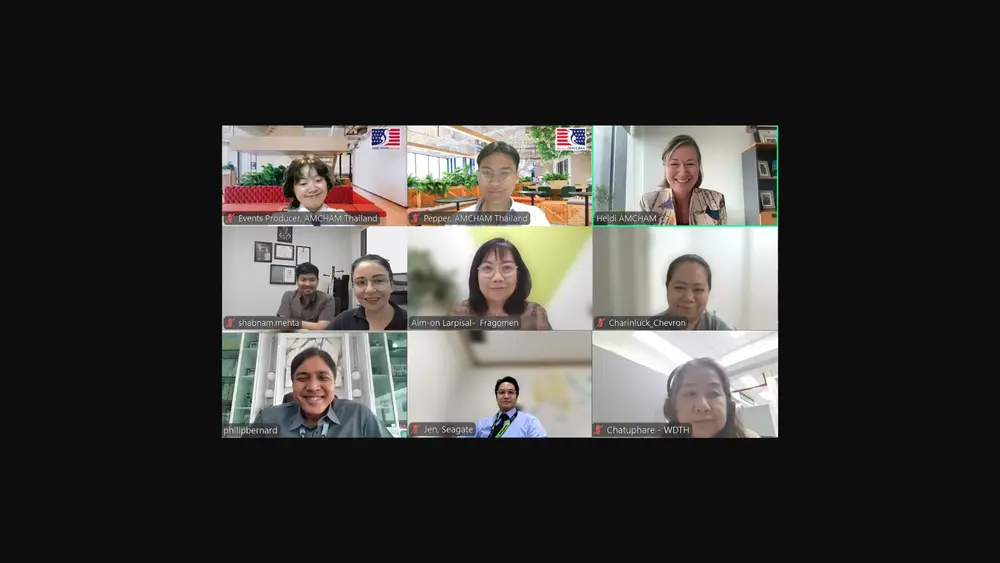
On September 29 to over 50 registrants, AMCHAM’s Legal Committee held the virtual event What’s New in U.S. & Thai Anti-Corruption Laws – Developments in Law Enforcement. In July 0f 2020, the U.S. Department of Justice (DOJ) and the U.S. Securities and Exchange Commission (SEC), released the second edition of its resource guide on the U.S. Foreign Corrupt Practices Act (FCPA). This is only the second resource guide issued by the DOJ and the SEC on the FCPA and updates the first resource guide issued eight years ago, in 2012. Understanding the FCPA and Thai anti-corruption laws is critical to everyone doing business in Thailand. Four speakers were invited to speak on the FCPA and its impact on doing business in Thailand: Sangita Patel, Deputy Chief Compliance Officer, Chevron; Douglas Mancill, Partner, Mulvana de Angeli & Associates; Shin Honma, Forensic Services Partner, PricewaterhouseCoopers Thailand; and John Frangos, Partner, Tilleke & Gibbins.
Douglas and Sangita opened the discussion with a joint presentation on the FCPA. Douglas provided a definition and short history of the resource guide and then asked Sangita to provide her expertise on questions regarding its application. The FCPA has a broad scope and covers prohibitive conduct everywhere in the world with its enforcement increasing since the 9/11 terrorist attacks. Without using personal example, Sangita commented on vague activity that is commonly found non-compliant in the business sphere. She stated that companies should be aware of hiring issues in order to mitigate any risks.
Their discussion was followed by Shin Honma, who gave a brief presentation discussing key elements of the FCPA. Shin provided examples on compliance sensitive accounts which included petty cash, commission and royalties, incentives and others. “It’s important to involve an anti-corruption specialist in your FCPA audits,” stated Shin.
John Frangos provided the final presentation in the discussion where he narrowed the compliance scope to cases application in Thailand. He began his presentation citing Thailand’s score from Transparency International, where a low score indicates that a country is more corrupt. With Thailand and other ASEAN countries being reportedly low on Transparency International’s index, the need for companies to remain vigilant in their compliance efforts remain vital. John listed frequent examples applicable to business operators in the Kingdom.
The event then opened to the audience for questions regarding items such as safe harbor exceptions and the frequency at which employees should be signing acknowledgement of the FCPA. Presentations from the event are available on the AMCHAM member portal.